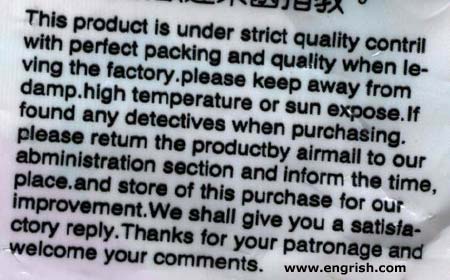
Anyone that has ever had to write instructions knows that more often than not, this is how they are perceived by those reading them later. Slightly foreign, almost making sense, but not quite.
It's difficult breaking a task down into sensible, manageable parts. No matter how carefully you proofread, there's always some important component missing. It's always the thing that is common sense, at least to the one doing the writing. It's the part of the task that is automatic.
The 'chick does a fair amount of technical writing for her job. For some unknown reason, her directors thought that she would be the ideal person to write a training manual for new case managers. (Let's all pause now, and shudder at the thought.)
The size of the task is horrific. How on earth do you put into writing all the things that you just know to do instinctively? How do you make sure that everything that is really important is covered? To be honest, the 'chick does not know.
To begin, the 'chick sat down and started a list...an outline-y sort of list, trying to think of where to begin, what to cover, and what to leave out. It's the leaving out part that is the most difficult. What if you leave out something that could be vital? But how to make it manageable for people to read? More importantly, how to make it at least somewhat interesting, so that people will read it?
After a few days of fiddling and tweaking and having panic attacks in the breakroom, it looked like the list was at least somewhat complete. The informational sections are not so bad but the instructions make the 'chick want to cry or stay home in bed, watching Oprah.
How to fill out a support note? Well, you just do. Somehow, that didn't seem to be quite . . . sufficient. But translating instinct into steps is hard, people. Darn hard.
So, the 'chick started trying to pay attention to what she was doing when she did it. And writing little steps along the way. This was enormously frustrating. She has no patience. None. And it slowed her down.
Next, the 'chick tried to con other co-workers into telling her how they did it so she could take notes on the process. That - not so successful. It was becoming apparent that everyone does this differently. And that's ok, but not helpful.
Finally, the 'chick took the coward's way out and moved on to the next information section and the next and the next. The procrastinator's way out.
Is there a happy ending to this tale? Well, no. The manual continues on with lots of information but precious few instructions. Those will be completed last of all, when there is nothing else the 'chick can possibly add to anything else.
What the 'chick needs is instructions on writing instructions.
Any takers???